
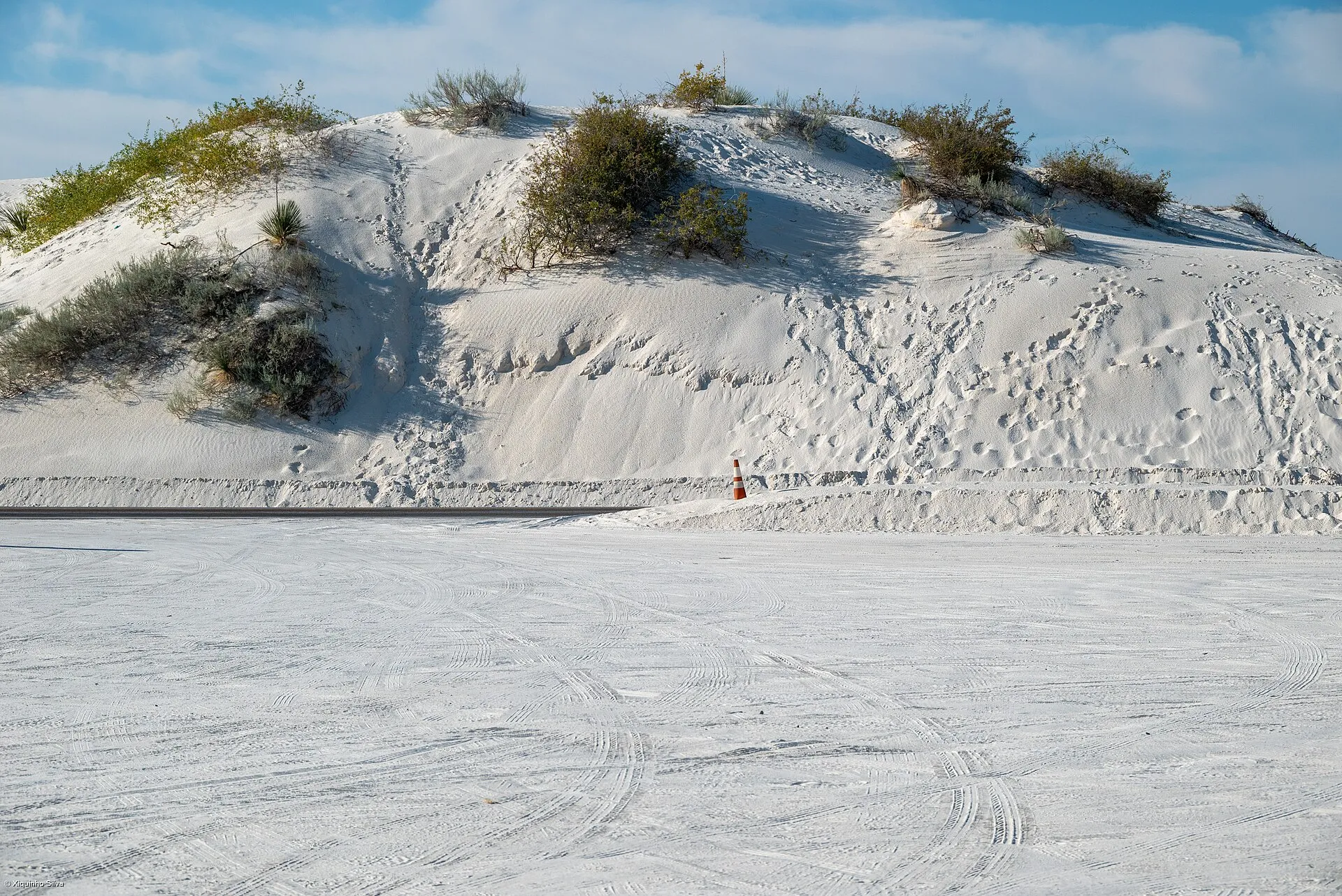
Adaptation is often discussed as a modern invention — a policy word, a budget line, a plan. At White Sands in New Mexico, it shows up instead as an ancient practice. Research published in Science Advances shows that during the Last Glacial Maximum, the people living around Lake Otero endured abrupt environmental changes: the lake surged and shrank, grasslands shifted, and water — the currency of survival in a desert basin — moved without warning. They responded the way communities still do: by adjusting, repeatedly, and staying.
The evidence sits in the gypsum sediments of the Tularosa Basin, where footprints of adults and children cross the same layers that record the climate swings. It is a rare archive in which the stress and the response are preserved together, and it gives the modern adaptation debate something it often lacks — a timescale longer than an election cycle.
Shocks, Not Trends
The key word in the White Sands findings is abrupt. The basin’s climate did not glide smoothly from one state to another; it lurched. Wet intervals broke into dry ones, and the lake that anchored settlement and hunting reorganised its shoreline. For people whose food, water and routes depended on that shoreline, each lurch demanded a practical answer within seasons, not centuries.
That rhythm will sound familiar far from New Mexico. In Nigeria’s Middle Belt and across the Sahel, farmers describe rains that arrive late, stop early, or fall all at once — not a smooth trend but a series of shocks to plan around. The White Sands record reframes such volatility: it is not an anomaly in human history. It is much of human history. See more of our reporting in top stories.
What Their Adaptation Looked Like
No single technology saved the people of Lake Otero. Their adaptation was a portfolio: mobility across a wide territory, a broad diet that could flex between lake resources and desert ones, and deep local knowledge of where water persisted. When one element failed, the others carried more weight. Archaeologists read that flexibility in the spread of camps, tools and footprint trails across the basin — including the famous trackways preserved today by White Sands National Park.
Modern adaptation science describes the same portfolio in contemporary language: diversification, mobility options, information networks, and reserves. The words differ across twenty thousand years; the logic does not.
Lessons That Travel
Three lessons travel especially well. First, plan for variability, not averages — the average year rarely arrives. Second, treat local knowledge as infrastructure: the farmer who knows which low field holds moisture, like the hunter who knew which spring survived drought, is holding an asset no budget can quickly replace. Third, keep options open longer than feels efficient; redundancy looks wasteful in stable times and priceless in shocked ones.
None of this romanticises the Ice Age. Adaptation there was surely accompanied by hunger, loss and hard choices the sediments do not record. The point is narrower and more useful: human communities have deep experience of climate instability, and the strategies that worked were practical, plural and local.
Reading the Desert From a Warming World
Today’s warming differs from the glacial world’s swings in one crucial way — its cause is known, and it is us. That makes the White Sands story a spur rather than a sedative: the people of Lake Otero adapted to changes they could not influence, while modern societies can still influence the size of the change they must adapt to.
The footprints in the gypsum do not offer policy. They offer perspective — that adaptation is an old human skill, that shocks rather than smooth trends are the test, and that the communities which fare best are those that prepare for the climate they might get, not merely the one they remember.
Reserves: The Oldest Adaptation of All
One more strategy in the record deserves emphasis, because modern budgets so often cut it first: reserves. Life around a volatile lake rewarded keeping something back — stored food, known fallback water, spare capacity in the seasonal round. Efficiency that consumes every surplus is, in a shock-prone world, a form of fragility wearing a smart suit.
From household savings to national grain stocks, the same logic scales. The White Sands families could not call a helpline when the lake fell; their reserve was their policy. Modern communities have more tools, but the principle their footprints endorse is unchanged: what you keep back in good times decides how the bad times go.


