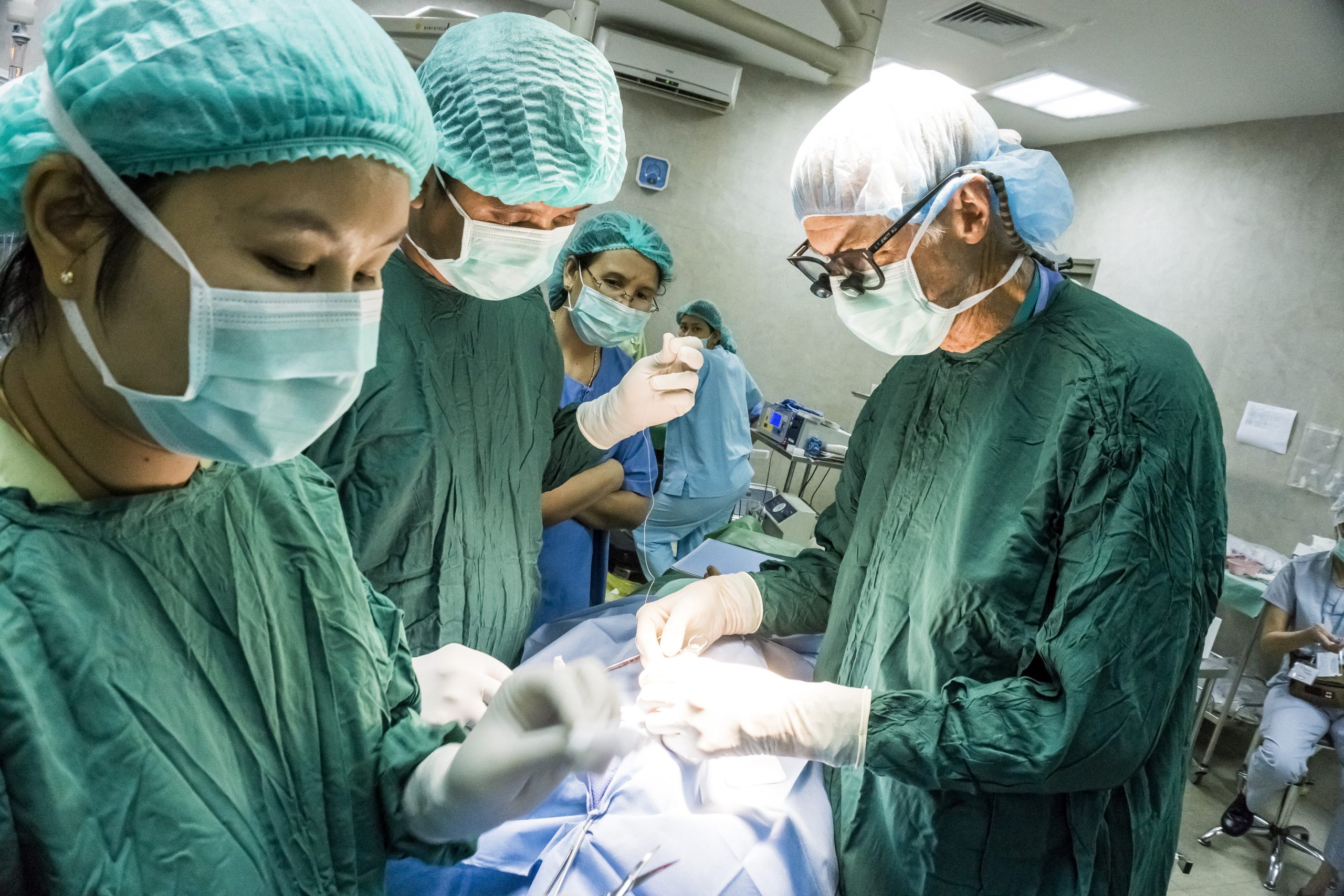
She went into hospital for one of the most common operations performed on women. She came out, according to her lawsuit, paralysed and facing the amputation of all four limbs. A mother of six is now suing the doctors and hospital involved in her hysterectomy, alleging a cascade of failures that turned a routine procedure into a life-altering catastrophe. Her case, covered in our news reporting, raises questions that extend well beyond one operating theatre: how do hospitals catch deterioration before it becomes irreversible, and who is accountable when they do not?
Hysterectomy is performed hundreds of thousands of times a year worldwide, usually safely. Guidance from bodies such as the American College of Obstetricians and Gynecologists describes it as a major but well-understood operation. That is precisely what makes cases like this one so disturbing — the gap between the routine expectation and the alleged outcome is where investigations focus.
The Allegations
According to the filing, complications developed after the surgery and were not recognised or acted upon in time. The lawsuit alleges that warning signs — the kind that post-operative monitoring exists to catch — were missed or minimised while the patient’s condition deteriorated, and that the resulting crisis caused spinal injury, catastrophic circulation failure and ultimately the loss of all four limbs. The defendants are expected to contest the account, and litigation of this complexity typically takes years. Nothing has been proven in court; what the filing does is place a specific, checkable narrative of the hours after surgery at the centre of the case.
Medical negligence law turns on two questions: what should have been done, and would doing it have changed the outcome? Expert witnesses will reconstruct the timeline minute by minute. Cases like this are often won or lost on the chart — the recorded observations, the escalation notes, the times calls were made and answered.
The System Questions Behind the Case
Patient-safety researchers will recognise the alleged pattern. Serious harm after routine surgery rarely results from a single dramatic error; it accumulates through small missed signals — an observation not taken, a concern not escalated, a deteriorating patient normalised because the ward is busy. Hospitals counter this with early-warning scores and escalation protocols, systems promoted by institutions such as Johns Hopkins Medicine, whose research has shaped modern patient-safety practice.
The lawsuit will test how those systems functioned on the days in question. It will also test staffing, supervision and the culture of speaking up — the factors safety science identifies again and again as decisive, and which no single clinician’s vigilance can substitute for.
A Family Rebuilt Around Care
Behind the legal filings is a family whose life has been reorganised around catastrophic injury: a mother of six who now requires round-the-clock support, children adjusting to a parent transformed, and costs — prosthetics, home adaptation, lost earnings, lifelong care — that the lawsuit seeks to recover from those it holds responsible.
The Broader Safety Conversation
Patient-safety advocates say cases like this one, whatever their individual outcomes, perform a function the regulatory system often struggles with: they force a public accounting of routine practice. Hysterectomy is among the most common major operations performed on women, and its very familiarity can dull scrutiny — of indication, of consent, of technique, of what patients are told about alternatives. Groups representing women’s health interests have long argued that the operation is recommended more readily than the evidence supports for some conditions, and that informed-consent conversations deserve the same rigour as the surgery itself.
Hospitals, for their part, point to confidential peer-review systems designed to examine complications without litigation’s distortions. The tension between those two accountability models — the courtroom and the review committee — is where this case will be watched most closely. Its verdict, when it comes, will be read well beyond one family and one operating theatre.
Whatever the verdict, the case will be read closely by hospitals everywhere, because its questions are theirs: not whether surgery carries risk — it always does — but whether the systems meant to catch trouble are real, staffed and believed. Follow the story in our top stories.