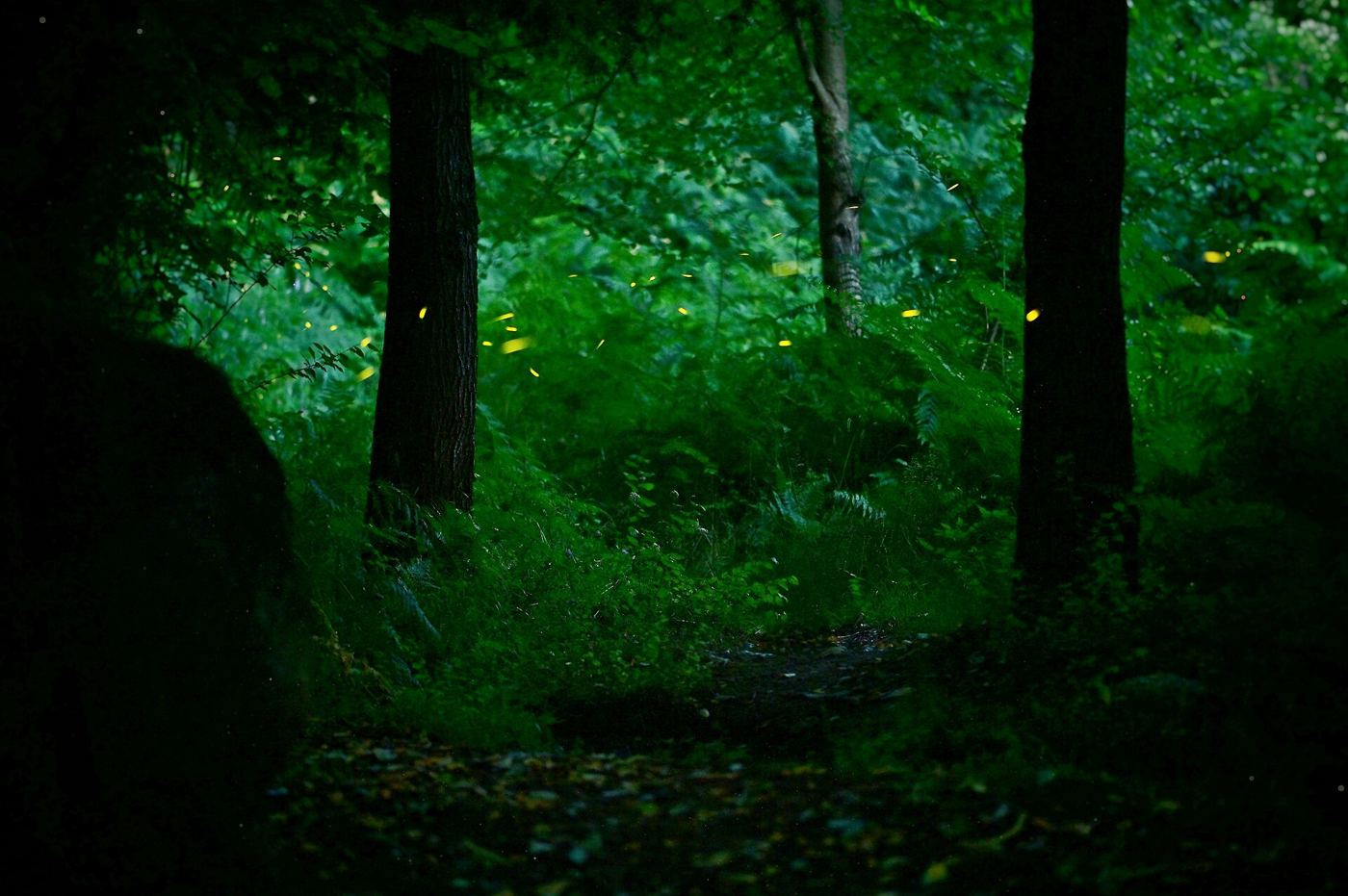
On warm summer evenings in meadows and forests, tiny lights begin to blink among the grass. Fireflies, which are actually beetles rather than flies, carry a chemical lantern in their abdomens that glows without producing heat. The light comes from a reaction between a substance called luciferin and oxygen, controlled by the insect with remarkable precision. Each species flashes in its own pattern, a code of long and short blinks that helps males and females of the same kind find each other in the dark. In some places in Asia and North America, thousands of fireflies gather in the same trees and begin to flash in perfect unison, turning whole riverbanks into pulsing walls of light. The display is one of the great spectacles of the insect world, and it draws visitors from far away.
What the Evidence Shows
Scientists study firefly flashes for more than their beauty. The insects use their light to warn predators that they taste bitter, and some females mimic the flashing patterns of other species to lure males in and eat them. The cold light of the firefly is also one of the most efficient lights in nature, wasting almost no energy as heat, and researchers have borrowed its chemistry for medical tests that glow when they detect a disease or a toxin. Firefly numbers are falling in many places as meadows are built over, streetlights drown out their signals and pesticides poison the damp soil where their larvae live. Conservationists now ask gardeners to leave patches of long grass and to switch off garden lights early, so that the summer blinking can continue for another generation. Reporting and analysis from sources such as NASA track the same developments, and specialists following the fireflies flashing in synchrony say the direction is now consistent across independent lines of evidence.
The Wider Context
Funding bodies are watching the fireflies flashing in synchrony closely because the work sits at the junction of basic curiosity and practical return. Grant panels increasingly ask for a path from discovery to application, while researchers push back that the most valuable uses of fundamental science are rarely the ones written into the original proposal. The tension is productive when both sides stay honest about timescales.
What Happens Next
The long view on the fireflies flashing in synchrony is that fields advance by accumulation rather than by single announcements. This result adds a solid, checkable piece to a structure many teams are building, and its authors have shared their data so the piece can be tested from every side. That is how the picture eventually becomes reliable enough to act on. You can follow related developments in our coverage of science.
It is also worth remembering how quickly the picture in this area has changed before. Positions that looked settled a few years ago have been revised as new data arrived, and the same humility is appropriate now. The strongest coverage of this subject, and the most useful advice, tends to come from sources that update their views openly when the facts move, rather than defending an earlier position long after it has stopped fitting the evidence available.