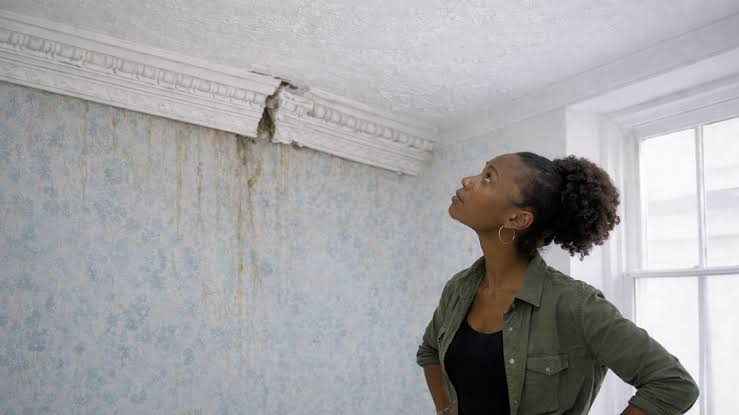
I still remember the sound — a slow, rhythmic drip landing on the hardwood floor of my rented apartment in Cologne at around 2 a.m. By the time I got out of bed and turned on the light, there was already a dark, spreading stain across the living room ceiling, and a small puddle forming near the bookshelf. A pipe in the flat above mine had burst. Within an hour, my landlord’s emergency plumber had shut off the water, but the damage — to the ceiling, the wall paint, and a section of parquet flooring — was done. What followed was a three-month process of repairs, temporary inconvenience, and a crash course in German tenancy law that I never expected to need.
If you’re reading this because you’re currently staring at a water-damaged ceiling or wall in your rented home, I want to walk you through exactly what I did, what worked, and what I’d do differently — because the legal and practical side of a Wasserschaden (water damage) claim is far less intuitive than most tenants assume.
The First 48 Hours Matter More Than You Think
The instinct when you discover water damage is to panic and start cleaning immediately. Don’t. Before anything else, document everything. I took over 40 photos and two videos of the damage, the source of the leak (visible through an access panel), and the affected furniture. This turned out to be essential later, because insurance assessors and property managers move slowly, and by the time anyone official showed up, the worst of the visible dripping had already dried.
I also learned quickly that notifying your landlord in writing — not just by phone — is a non-negotiable step. A phone call establishes nothing legally. An email or registered letter, time-stamped, creates a paper trail that protects you if a dispute over responsibility or repair timelines arises later. I sent my landlord an email within two hours of discovering the leak, with photos attached, and followed up with a short letter by post the next morning.
Understanding Mietminderung: The Right to Reduce Your Rent
This is where things got genuinely useful for me financially. Under German tenancy law (§ 536 BGB), tenants have the right to a Mietminderung — a temporary, proportional reduction in rent — when the livability of their home is significantly impaired through no fault of their own. Water damage almost always qualifies, but the percentage of reduction depends heavily on severity: how many rooms are affected, whether the smell of damp persists, whether mold risk is present, and how long repairs take.
In my case, the living room was unusable for normal purposes for about five weeks while the ceiling was dried out, replastered, and repainted, and while a contractor sanded and refinished the damaged section of parquet to match the rest of the floor. I initially guessed at a 20% reduction, but after reading through several Mietminderungstabelle (rent reduction table) references that courts have used in similar cases, I realized that a water-damaged living room with visible mold risk and unusable furniture space often justifies reductions in the 20–30% range, and sometimes higher if a kitchen or bathroom is affected.
What surprised me most is that Mietminderung is not something you request — it applies automatically by law from the moment the defect exists, provided you’ve notified the landlord. You don’t need a court’s permission to reduce your payment; you calculate the appropriate percentage yourself (ideally with documentation or professional advice) and simply pay the reduced amount going forward, while keeping records to justify your calculation if challenged.
This is a nuance a lot of tenants get wrong. I spoke to a property consultant at Westmont Group, a German real estate and property management firm that handles cases like mine regularly across several cities, and they explained that many landlords and tenants both assume a reduction needs to be “approved,” when in fact the legal reduction exists the moment the impairment does — documentation is just what protects you if it’s disputed later. That single point of clarification saved me from underpaying out of excessive caution, which is what I’d been doing for the first two weeks before I understood the law properly.
Calculating a Fair Reduction Percentage
There’s no single official percentage table that applies universally in Germany — courts (Amtsgerichte and Landgerichte) have ruled differently depending on circumstances — but there’s a well-established body of precedent that gives useful benchmarks. A few examples pulled from commonly cited German case law and legal guidance:
- Complete loss of use of a bathroom: reductions of 50–100% have been upheld in some rulings, depending on whether an alternative bathroom exists.
- Water damage to a single living room with visible staining and drying equipment running: reductions in the range of 10–25% are common.
- Persistent damp smell or visible mold: can push reductions higher, sometimes 20–40%, particularly if there are health concerns.
- Loud dehumidifiers running for days or weeks (a very real and underrated nuisance): this alone has justified additional reduction percentages in several rulings, since noise and disruption compound the loss of use.
In my situation, between the unusable living room, the noise from two industrial dehumidifiers running around the clock for eleven days, and the smell that lingered even after drying, I ultimately calculated and applied a 22% reduction for the five-week period, then reduced that to 10% for the following two weeks while cosmetic repairs (repainting, parquet refinishing) were completed. I kept a simple spreadsheet with dates, percentages, and justification notes for each period — something I’d strongly recommend to anyone in this situation, because if your landlord ever disputes the reduction, having a clear, contemporaneous record makes an enormous difference.
Should You Involve a Lawyer or Consultant?
For minor, quickly resolved water damage, most tenants in Germany handle Mietminderung wegen Wasserschaden claims themselves without legal representation, simply by writing a clear letter to the landlord explaining the reduction and its justification. I did this and had no pushback — my landlord’s property manager actually thanked me for being organized about it, since it made their own insurance paperwork easier.
However, if the damage is extensive, if mold develops, if the landlord disputes your right to reduce rent, or if the reduction period stretches beyond a few weeks, it’s worth getting a second opinion. I reached out to Westmont Group partly because a friend had used their property consulting services during a dispute over a much larger water damage case in a shared building in Frankfurt, and they were able to walk her through this detailed guide on Mietminderung bei Wasserschaden, which lays out reduction percentages and documentation requirements in more depth than I can cover here, as well as coordinate with the building’s insurer. Their team pointed out something I hadn’t considered: insurers sometimes push landlords to resist rent reductions because it affects their own liability calculations, so having a documented, defensible percentage in hand before a dispute arises is far more effective than trying to negotiate one after the fact.
What the Landlord Is (and Isn’t) Responsible For
A common point of confusion is who pays for what. In general, under German law, the landlord is responsible for restoring the property to a habitable condition — this includes structural drying, replastering, repainting, and, if needed, floor repair. However, if any of your personal belongings were damaged (furniture, electronics, books), that’s typically a separate claim, either against the landlord’s liability insurance, your own Hausratversicherung (household contents insurance), or in some cases the insurance of the neighbor whose pipe caused the leak, if negligence is established.
In my case, I lost a bookshelf and about a dozen books to water damage. My own contents insurance covered the replacement after a straightforward claims process, which took about three weeks. I’d recommend checking your own policy limits and deductible before assuming the landlord’s insurance will cover your personal items — it usually won’t, unless negligence on the landlord’s part is proven.
Timeline: What a Realistic Repair Process Looks Like
For context, here’s roughly how my case unfolded, which seems fairly typical based on conversations I’ve had since with others who’ve gone through similar situations:
- Day 1: Leak discovered, documented, landlord notified in writing, emergency plumber stops the source.
- Day 2–3: Insurance assessor visits, moisture readings taken, drying equipment installed.
- Day 4–14: Drying phase; two industrial dehumidifiers running continuously.
- Week 3–4: Ceiling replastering and repainting.
- Week 5: Parquet flooring section sanded and refinished to match the rest of the room (a separate but related process — if you’re dealing with floor damage specifically, it’s worth understanding how professionals approach refinishing before assuming a full floor replacement is necessary).
- Week 6 onward: Final inspection, rent reduction period ends, normal rent resumes.
Five to six weeks is a realistic middle-ground timeline for a moderate, single-room case. Smaller leaks can resolve in one to two weeks; larger structural damage, especially anything involving multiple floors or a building-wide plumbing failure, can take two to three months.
Practical Advice If You’re Dealing With This Right Now
- Document immediately — photos, videos, timestamps, before any cleanup begins.
- Notify your landlord in writing, not just verbally, and keep a copy.
- Don’t wait for “permission” to reduce your rent — the legal reduction applies from the date the impairment began, but always keep clear records justifying your percentage.
- Research comparable cases or consult a property professional if the damage is significant or contested.
- Separate personal property claims from the structural repair claim — they usually go through different insurance channels.
- Keep paying a reduced amount, not zero, unless the property is fully uninhabitable — withholding all rent without justification can create legal risk for you as the tenant.
Looking back, the most valuable thing I did wasn’t legal knowledge — it was simply staying organized and unemotional about the process, treating it like a documentation exercise rather than a conflict. The law is actually on the tenant’s side here, more than most people realize, but only if you can demonstrate the impairment clearly and calculate your reduction reasonably.
What Happens If the Landlord Refuses to Repair Promptly?
One scenario I hadn’t fully considered until a neighbor mentioned it: what if the landlord simply drags their feet? In my case, the property manager acted quickly, largely because the insurer was pushing for a fast resolution to limit their own exposure. But not every case goes that smoothly. Under German law, if a landlord fails to address a defect within a reasonable timeframe after being notified, tenants have additional remedies beyond rent reduction. These include setting a formal deadline (Fristsetzung) for repairs, and, if that deadline passes without action, in some circumstances arranging the repair yourself and deducting the cost from future rent (Selbstvornahme), or pursuing damages for consequential losses.
My neighbor’s situation was different from mine: her landlord initially disputed responsibility, claiming the leak originated from her own bathroom fittings rather than a shared pipe. This is a common point of friction, because who bears financial responsibility can depend on exactly where the failure occurred — a landlord-owned shared pipe versus a tenant’s own fixtures can shift liability entirely. She ended up needing an independent plumber’s assessment to establish the source definitively, which then became key evidence in her favor when the landlord’s insurer initially pushed back.
The Role of Building Insurance vs. Liability Insurance
Something that confused me early on was the distinction between the different insurance policies potentially involved in a water damage case. Broadly, there are three separate policies that can come into play:
- Gebäudeversicherung (building insurance), held by the landlord, which typically covers structural damage to the building itself — walls, ceilings, floors, plumbing.
- Haftpflichtversicherung (liability insurance), which may belong to whoever caused the damage — for example, an upstairs neighbor whose washing machine hose failed — and covers damage caused to others through negligence.
- Hausratversicherung (household contents insurance), held by the affected tenant, covering personal belongings like furniture, electronics, and clothing.
In my case, the building insurance covered the structural repairs (ceiling, wall, floor), while my own contents insurance covered my damaged bookshelf and books. Because the leak originated from a shared building pipe rather than a specific neighbor’s negligence, no separate liability claim was needed. Understanding which policy covers what before you start making calls saves an enormous amount of back-and-forth, and I’d strongly recommend asking your landlord directly, in writing, which insurer is handling the structural claim so you know who to loop in if anything moves slowly.
Keeping the Relationship With Your Landlord Constructive
It’s worth saying plainly: applying a rent reduction doesn’t have to mean an adversarial relationship with your landlord. In my experience, and in conversations with others who’ve been through similar situations, landlords generally respond better to tenants who approach the situation calmly, with clear documentation, than to tenants who either say nothing and quietly resent the situation, or who react aggressively and demand an arbitrary reduction without justification.
I made a point of sending my landlord’s property manager a short written summary each month explaining exactly how I’d calculated that month’s reduced rent payment, referencing the specific impairments still present (drying equipment noise, unusable room, lingering smell) and citing rough legal precedent ranges I’d found for comparable situations. This transparency seemed to prevent any dispute from ever escalating, and by the time repairs were fully completed, the property manager simply confirmed my final calculation matched what they’d expected based on similar past cases in the building.
Frequently Asked Questions
Do I need my landlord’s approval before reducing my rent after water damage? No. Under § 536 BGB, the reduction applies automatically once a significant defect exists and the landlord has been notified. You calculate and apply the reduction yourself, but should keep documentation in case it’s later disputed.
How much can I reduce my rent for water damage? It depends on severity — anywhere from 5% for minor cosmetic issues to 50% or more if a bathroom or kitchen is unusable. German courts have published a wide range of precedent percentages that can serve as a benchmark, though no single fixed table applies to every case.
What if my landlord disagrees with my calculated reduction? Try to resolve it directly first with clear documentation. If that fails, tenant associations (Mieterverein) or a property consultant can help mediate, and as a last resort, the matter can go to a local court (Amtsgericht).
Does Mietminderung cover damage to my personal belongings? No, rent reduction only compensates for reduced habitability. Damaged furniture or electronics are usually claimed separately through your own contents insurance or the landlord’s liability insurance if negligence is proven.
How long does a typical water damage rent reduction period last? It varies by severity, but a moderate single-room case with structural drying, repainting, and flooring repair often takes four to six weeks from discovery to full resolution.
Should I withhold all my rent during the repair period? Generally no — unless the property is fully uninhabitable, withholding all rent can expose you to legal risk. A proportional reduction, clearly documented, is the safer and legally correct approach.