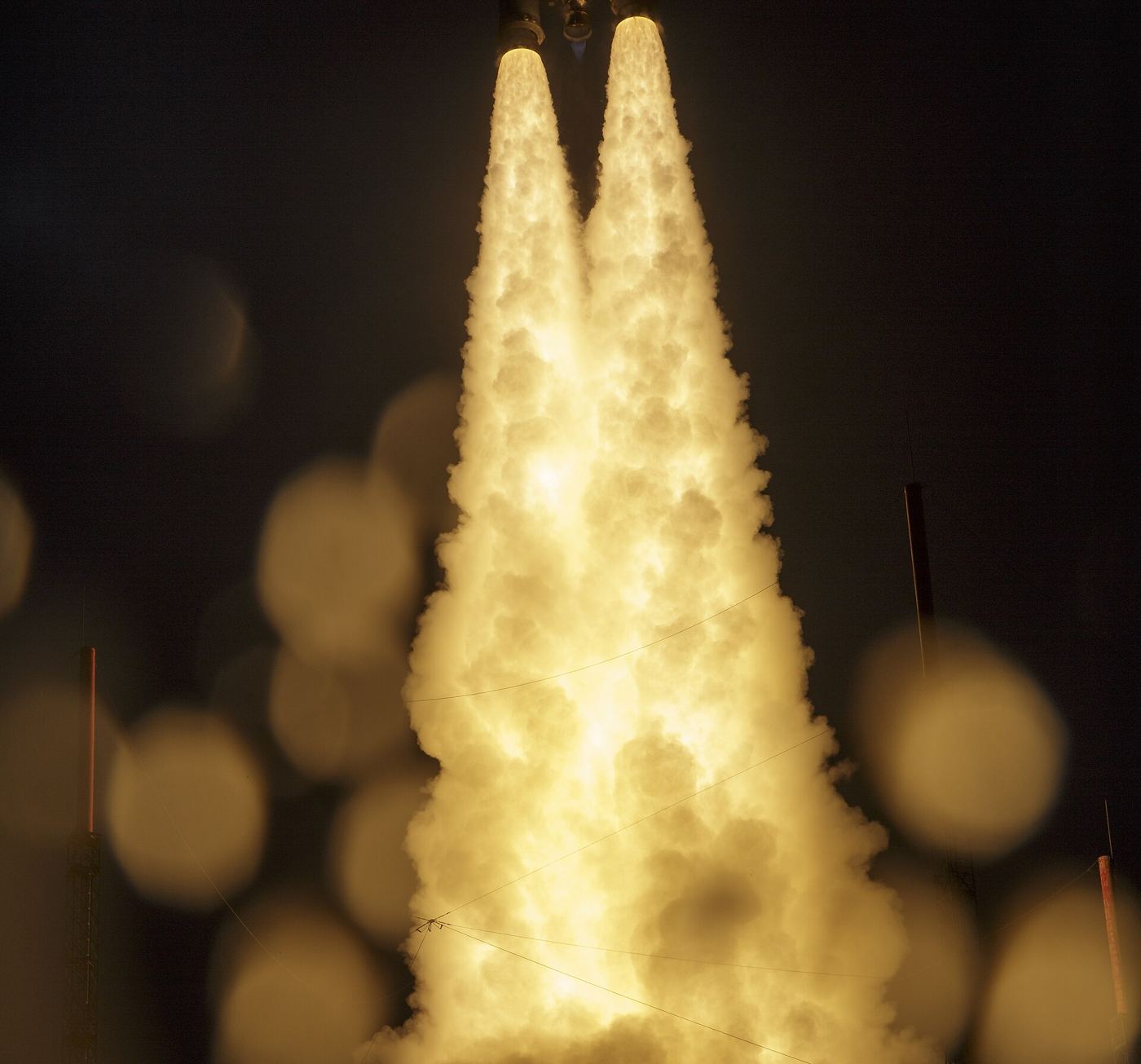
Amazon is preparing to launch 36 more Leo satellites, formerly Project Kuiper, on an Arianespace Ariane 6 rocket from Europe’s Spaceport in French Guiana on 24 November 2026. The mission, named LE-04, is the fourth Leo launch on Ariane 6 this year and the 16th launch for the constellation overall. Liftoff is targeted for 10:45 a.m. UTC, with the satellites deployed at about 465 kilometres altitude, after which Amazon’s team in Redmond, Washington, takes control. The full constellation is planned to reach 3,276 satellites offering broadband internet access around the world. Arianespace said the VA271 mission is the tenth flight of Ariane 6, and the second mission to fly the larger 36-satellite payload for Amazon Leo.
What the Evidence Shows
The launch follows a setback on 15 November, when a United Launch Alliance Vulcan rocket carrying Leo satellites suffered an anomaly on its inaugural mission and the payload was lost. Amazon said there is risk with any launch, especially an inaugural mission, and expressed confidence in ULA’s long-term plans. The previous day’s Ariane 6 countdown was also halted by a technical event affecting ground-support systems, before teams completed checks and set the new 24 November window. If successful, the mission will bring the total number of Leo satellites deployed to 136, still far behind SpaceX’s Starlink. Amazon’s constellation will compete directly with SpaceX’s Starlink, which already serves millions of customers, so reliability and launch cadence will matter greatly. Reporting and analysis from sources such as IEEE Spectrum track the same developments, and specialists following Amazon Leo satellite launch say the direction is now consistent across independent lines of evidence.
The Wider Context
Adoption of Amazon Leo satellite launch follows a familiar pattern with an unfamiliar speed. Early users tolerate rough edges in exchange for advantage, mainstream users arrive when the tool disappears into existing workflows, and the market consolidates around whoever made that transition feel effortless. Vendors are racing less on raw performance now than on integration, support and trust.
What Happens Next
The realistic forecast for Amazon Leo satellite launch is steady integration rather than sudden replacement: embedded in products people already use, improving in increments, and regulated in proportion to its reach. The companies and institutions that plan on that basis, training staff and redesigning processes instead of chasing launches, are the ones the adoption data tends to vindicate. You can follow related developments in our coverage of technology.
It is also worth remembering how quickly the picture in this area has changed before. Positions that looked settled a few years ago have been revised as new data arrived, and the same humility is appropriate now. The strongest coverage of this subject, and the most useful advice, tends to come from sources that update their views openly when the facts move, rather than defending an earlier position long after it has stopped fitting the evidence available.